Leadership is broken - Long live feminist leadership

It’s feeling like a challenge to write an upbeat newsletter as we approach International Women’s day, when our news feeds are littered with examples of entitlement, domination and control driving agendas. It seems the love of power more than the power of love is dictating life and work spheres in a multitude of ways. I’ve long believed that this calendar moment could be better used by centering the system of patriarchy rather than celebrating women’s ability to navigate it. That would allow us to move away from the binary of ‘women are good, men are bad’ narratives and ask us all to actually explore - both men and women - the roles we play in maintaining and reinforcing this oppressive system. A joint effort to notice, name and take action in service of liberation for everyone, including men. But there’s more work for men to do.
Leadership is one of those spaces that could play a role in this change. For decades leadership models have been based on what some term Zombie Leadership, the concept that ‘dead ideas’ about leadership still shape internalised conditioning about what it is. The idea of a hero (male) leader creating an ego shaped legacy, with special qualities only a few can achieve, with strong leadership defined by superiority, control and hierarchy, leading followers who can’t survive without their direction.
I want to take this opportunity to invite you to think more deeply about Feminist Leadership. Not the kind that emerges from self interested white feminist thinking but the real gritty intersectional kind, that bravely puts humanity first. The kind that isn’t about women as leaders, but about an ethos that applies to anyone seeking to centre what matters most in systems change. Hannah Spencer is a great example of this. If I were rebranding this, I might rename it Social Change Leadership - an approach to leadership for anyone, that centres the responsibility to reduce harm, reimagines what is accepted as set, builds powerful care centred relationships, increases agency through trust and removes blocks through healthy conflict, truth telling and repair.
This feels like a timely moment to re-evaluate leadership, whether we are leaders by title or embrace our responsibility for self leadership.
Read on to learn more about what this does and doesn't look like.
What we’re noticing

The system protects itself
We see this kind of leadership modelled by the Wall Street Discriminates movement, spearheaded by women working in finance across major cities around the world, demanding accountability for misogyny, assault and gaslighting. The stories shine a light on the breadth of organisational complicity in letting women down, in a system full of zombie leaders. I wrote about this in an article 'The system protects itself’.
It would be easy to think this kind of attack is ‘over there’. But in the UK third sector we are seeing growing far right attempts to encroach into women’s movements, either through issue based work that acts as a gateway, or through direct infiltration of movements themselves. In a conversation this week, a VAWG sector leader told me this has become an everyday challenge in their work. The great work of Hope not Hate details the ways in which issues are convenient vehicles for enforcing a strategic shift in what is normalised in society.
what we’re practising
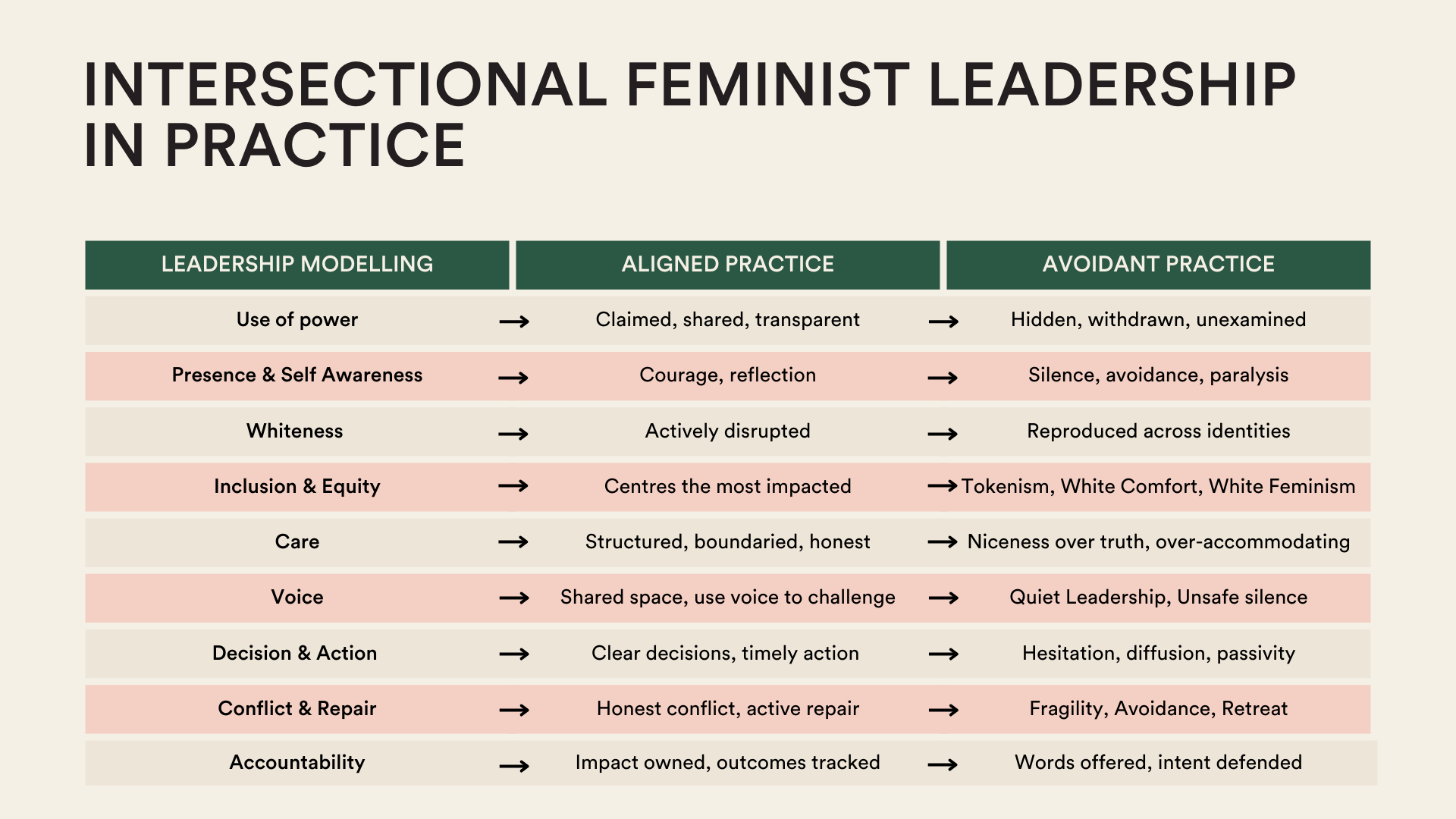
When we talk about feminist leadership in practice, we’re referring to the everyday choices we make in how we use power, respond to conflict, take responsibility and create space for others. It asks for shared vision, truth-telling, courage and clear communication so our people know where they stand and how they can step forward. That clarity is what enables genuinely collaborative leadership.
The framework above contrasts what aligned practice can look like with the more avoidant patterns that can emerge when power, race, conflict or accountability go unexamined. Below are a few reflective prompts you might use to explore what this looks like in your own leadership practice:
Use of power - Where am I holding power without naming it?
Presence & Self Awareness - What difficult conversation or issue am I avoiding?
Whiteness - How aware am I of how race and class shape my impact on others?
Inclusion & Equity - Where might I be assuming that stepping back is allyship, rather than taking responsibility?
Care - Where am I confusing care with niceness?
Voice- Where am I staying quiet to stay safe?
Decision & Action - When difficult issues arise, what do I notice about the speed and clarity of my response?
Conflict & Repair - Where might fragility be shaping how conflict is handled?
Accountability - What has actually changed for the people most impacted?
If you’re interested in exploring how feminist leadership might show up in your organisation’s culture, decision-making and leadership practices, we’d love to talk.
What's resourcing us
Masculinity, power and reflection
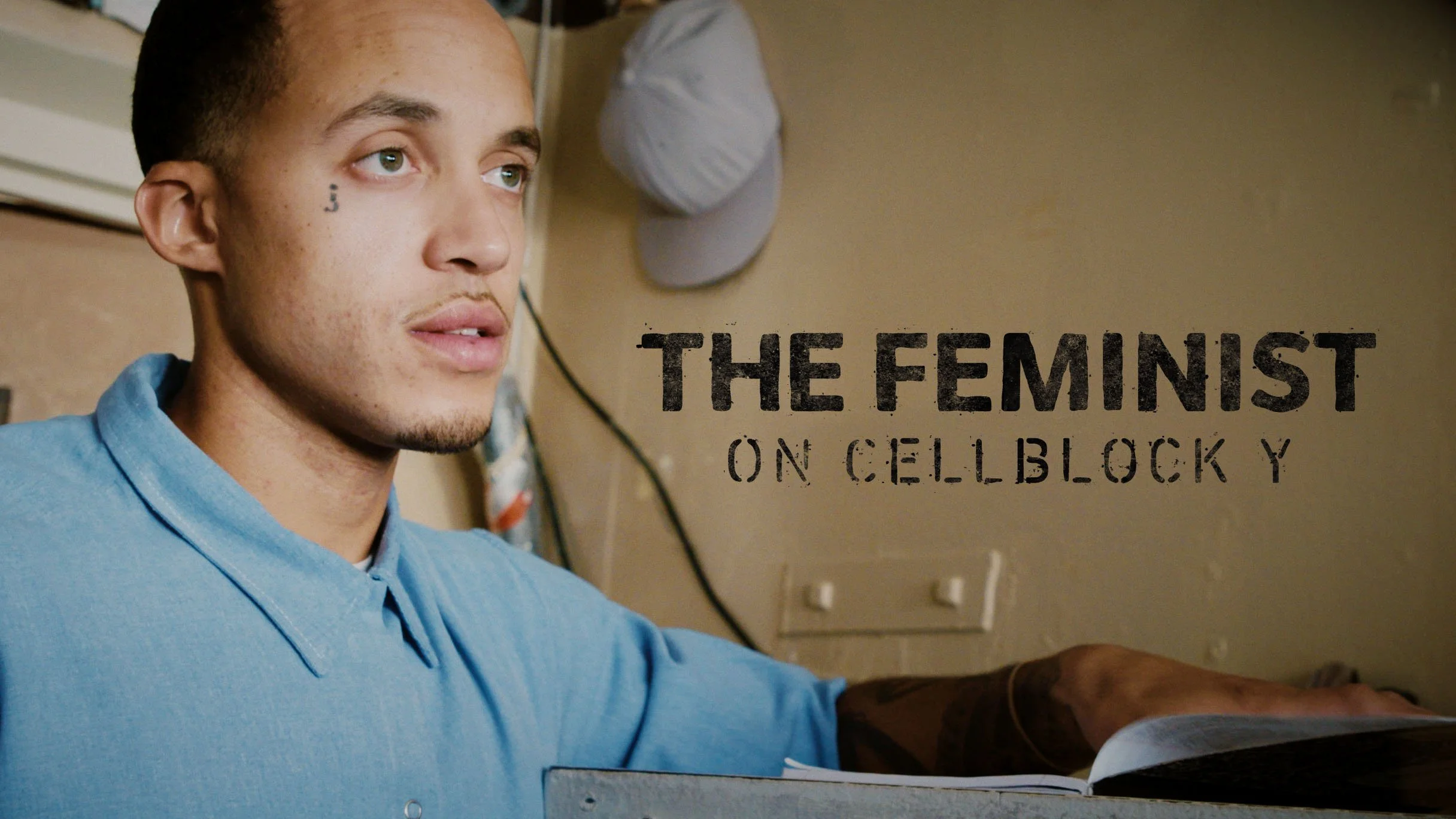
Letesia has been revisiting a documentary we shared in our newsletter last year: The Feminist on Cellblock Y.
Set in an all-male prison in Soledad, California, it follows a group of incarcerated men exploring feminism through the work of Bell Hooks, opening up honest conversations about masculinity, power and the emotional costs of patriarchy.
Capitalism, sexuality and gender
Eloise recently read Eros and Alienation by Alan Sears, which offers a thoughtful and much-needed exploration of how capitalism shapes the formation of sexuality and gender - and how the systems that govern our work and economic lives also deeply influence our intimate and relational ones.
The book invites us to look beyond individual identity or behaviour, and instead consider the broader social and economic conditions that shape whether and how we experience connection and desire.