Leading Well in 2026: The Real Story of Leadership and Wellbeing

How leaders stay resourced when the work and the world are heavy.
When I burned out 10 years ago, the hardest part was the feeling that I lost my story and didn’t know what the new one was. My sense of who I was, what I offered, what I could rely on in myself, what success looked like were so entangled with my work identity that when it collapsed, I couldn’t find the thread of me inside it. When I eventually landed on turning my pain into purpose and retrained to work inside organisations to transform the toxic dynamics that had broken me, I began to fully heal.
It was during my coaching training that I discovered narrative coaching and in particular, the role of story, in wellbeing and resilience. My training was delivered by an actor who did a brilliant job of helping us see what it means to tell stories about ourselves and our experiences and how they could either liberate or trap us.
I’ve been reminded of this moment as we begin this year, with so many of us having led through tough times in 2025, and as we face the new year with refreshed energy and mojo, but with no fewer challenges ahead to meet.
It feels so important to notice when we lost our way in our own story - perhaps we couldn’t see the impact we’re making or lost faith or hope because of challenging external contexts. Perhaps we over focused on the hard parts and that makes it difficult to feel grounded, imaginative or purposeful. Perhaps we were too busy to even notice our own story that was being told through our what we did and didn't do or say, our workplaces. I know I found myself in a whirlwind like this at moments last year - and so did so many of those whose work asks them to face what is hard and challenging in our societies and communities.
So as we begin this year focused on what lies ahead personally and professionally, this newsletter is an invitation to ask yourself three questions:
1. What story am I telling right now?
2. What story is my organisation telling now?
3. What’s the story we actually need?
What we’re noticing
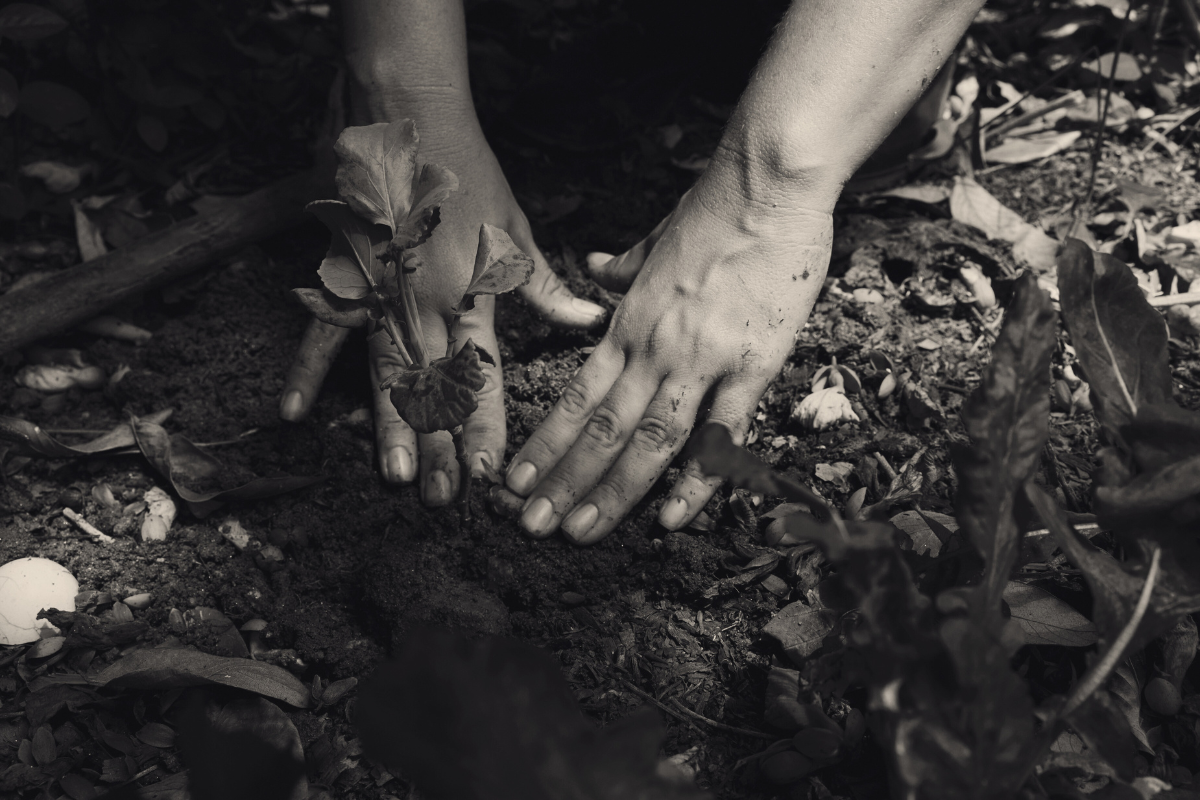
Wellbeing grows with the right conditions
When my wonderful coach Maude joined us as our guest in our Community Conversation last year, we explored dominant stories around wellbeing: What does it mean to be well when the world feels like it’s on fire?
Maude offered a reframing that cut through a lot of the noise. We’re taught to treat wellness as a state, something we should reach and then maintain. But most of us don’t live in conditions that make that possible. If we see wellbeing as moments - brief pockets of joy, clarity, relief, connection or gratitude that sit alongside the harder parts - it opens up something much more humane.
It means you don’t have to wait for life or work to become easier to feel well. You don’t need a perfect week, or a light workload, or a rested January. You just need to notice the moments that are already there, however small. For many leaders, that shift alone removes the pressure to perform wellness and allows them to access something steadier and more realistic: a way of being well in motion, not in perfection.
What that conversation revealed is that wellbeing is rarely improved by effort alone. It grows with the right conditions - when people feel seen rather than scrutinised, accompanied rather than isolated, listened to rather than managed. It shows up when people can speak honestly about what’s hard without worrying about the consequences. It strengthens when teams make space for the real conversations underneath the work, not just the work itself. And often, wellbeing is enhanced when we pay attention to small moments and details of someone's experience.
what we’re practising
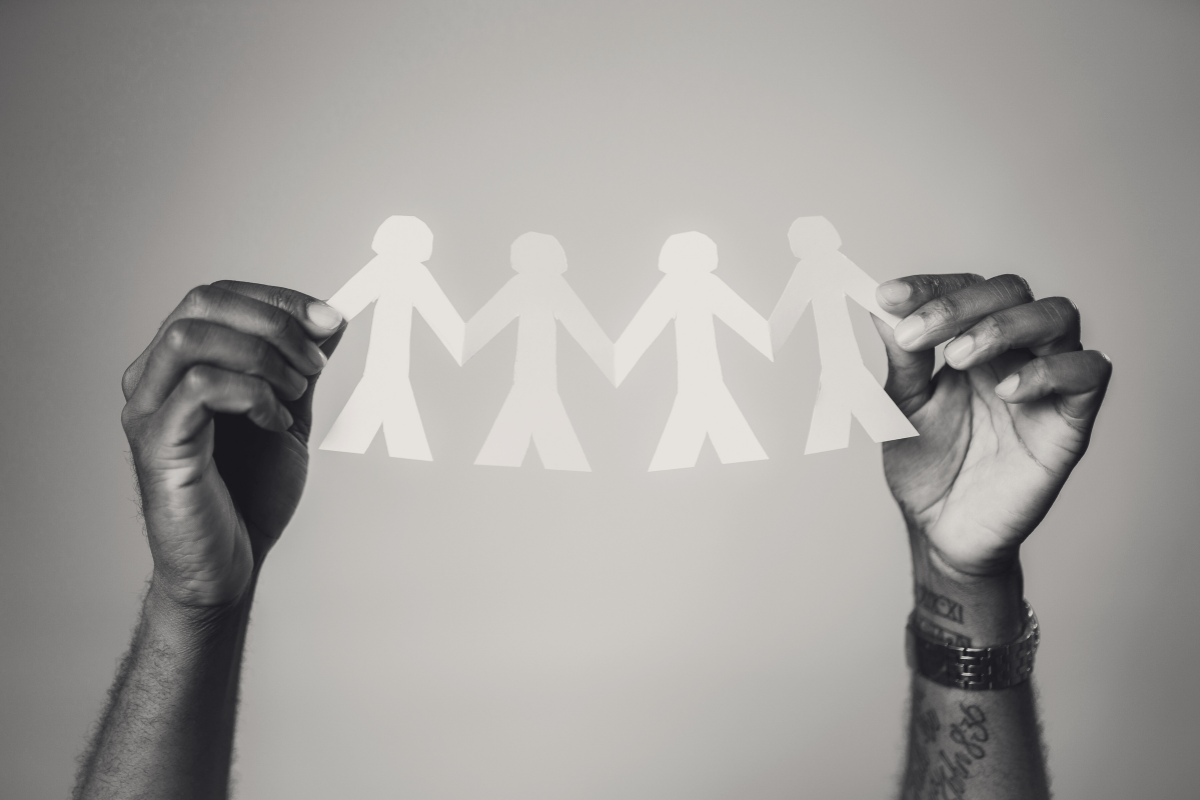
Building skills for empathy and compassion
A big part of storytelling right now is around unity and division and what's happening outside in our communities will be impacting dynamics and relationships inside organisations. How are we supporting teams to bring the empathy and compassion needed to genuinely work with difference and not fall into divisive stories we are seeing projected elsewhere?
In a time of deepening polarisation, pressure and fatigue, it’s becoming easier for assumptions, categorising and defensiveness to take hold - even in organisations committed to bringing about a more just and equitable world. We're losing the skills for empathy and compassion and we believe investigating our own tendencies for 'othering' which we all have, is an important first step.
Letesia will be running a free lunchtime webinar with Charity Digital exploring this topic on Thursday 5th February, and you're very welcome to join us.
Moving Beyond Us and Them: Othering in Action is a practical session exploring how othering shows up in everyday organisational life - across teams, roles and communities - and offers practical ways to interrupt it and choose curiosity, care and connection instead.
An invitation to help our work reach further

We shared this invitation in December, and we know that’s a busy time of year - so we’re gently sharing again now, as we step into 2026.
If our work has supported you or your organisation, we’d love your help reaching others who might need it. We know that change spreads through relationships. And warm introductions - rooted in trust - help this work reach places we can’t access on our own.
We’re especially keen to connect with organisations looking for support with:
bringing values into lived practice
strengthening team dynamics
supporting leaders through complexity or change
If someone comes to mind, you can reply with a name, organisation or link, make an email introduction, or reach out if you’d rather talk it through first. We’ll take any introduction forward with care.
Thank you for being part of this community - and for helping this work continue to grow.